
At the Royal Exhibition of 1862, Queen Victoria made an appearance in a silk gown dyed with mauveine. In the Imperial College chemistry archives, there is a sample of silk (approx 5 x 10 cm in size) dyed with a batch of the original dye synthesised in the 1850s, and a "penny lilac" postage stamp originally thought to have been dyed with the same compound. Curiously, the "correct" structure for the compound was only finally put to rest as late as 1994 (appropriately enough, in a journal named after Perkin himself). This turns out to be a mixture of the compound shown and one other containing one more methyl group (click on the button on the right to see location of the extra methyl group ).
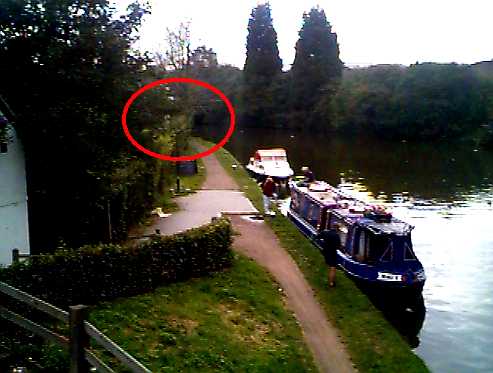
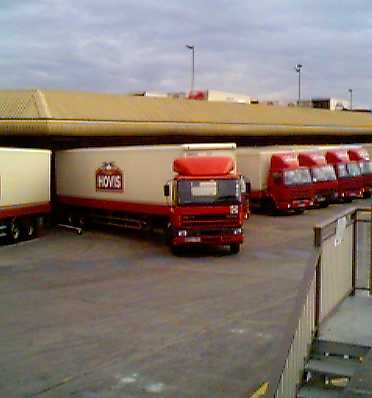
The new colour fell of of fashion in the late 1860s, but out of one of the world's first chemistry "R&D" laboratories, Perkin discovered two new dyes, Britannia Violet and Perkin's Green (the water in the nearby Grand Union Canal was said to have turned a different colour every week- depending on what dyes were being made at the time). In 1869, Perkin synthesised the vivid natural red dye called Alizarin (known chemically as sodium 9,10-dihydro-3,4-dihydroxy-9,10-dioxoanthracene-2-sulfonate). The German company BASF reputedly beat him to the patenting process by one day! Perkin and BASF came to an agreement over the manufacturing processes, but the heyday of synthetic dye manufacturing in Greenford was now waning, and in 1874, Perkin sold his dyeworks to Brooke, Simpson and Spiller. It continued operation under its new owners only until 1876, when it was sold the tar makers Burt, Boulton and Haywood, the dye operations of which joined the British Alizarine Company. This in turn became part of ICI in 1931, and in more modern times became known as Zeneca, a company which can claim to be the successor of Perkin. Nowadays in Manchester, there remains a significant collection of interesting chemicals and other Perkin artefacts. Parts of the original buildings survived until the centenary celebrations in 1957, and the last traces were demolished as recently as 1976. Nowadays, the site of the laboratory for Perkin's dyeworks serves as a distribution point for millions of loaves of bread and rolls for West London.
There is an interesting chemical postscript to the story of Mauveine. Essentially, its synthesis was remarkable because it was based on a one-pot transformation of a simple (mixture) of aromatic anilines, which are simple organic bases. Such bases are peculiarly prone to producing intriguing products in apparently simple reactions. Scorpionine was made recently in Charles Rees' group (appropriately enough Charles is wearing a bow tie dyed with mauveine) from the reaction of S2Cl2 with di-isopropyl ethyl amine. Another simple base (DABCO, or di-aza-[2.2.2]bicyclo-octane) reacts with Bromine to give a very odd compound containing linear chains of 7 bromine ions, the chain having an overall charge of 3-. Both Scorpionine and the DABCO/Br2 adduct are highly coloured, just like mauveine.